Checking your roof, wall or garden
We check the planning rules before anyone quotes.
Read moreWe reply to every enquiry by email. Send us your postcode and we will take it from there.
Plug-in Solar South West / Fitting, and an outdoor socket
Most people can plug the panel in themselves. If the nearest socket is outside, it has to be a weatherproof one, and that's a job for an electrician. We arrange it.
The specification these devices are approved against is written for products "intended for installation and operation by ordinary persons". A one component device arrives with its inverter built in and its direct current connections already made. A two component kit has you join the panel to the inverter. Neither of those counts as electrical work on your house.
The same specification is clear about the other side of the line. Testing or altering the fixed wiring of your house is work for a qualified electrician. So is anything that changes the final circuit, including replacing the overcurrent protection device where your circuit needs it. You are also told to have any socket you are unsure about inspected before you use it.
People who responded to the government consultation flagged older homes and older wiring as the real fire risk. The South West has a lot of pre war and Victorian housing, so it is worth having the socket looked at.
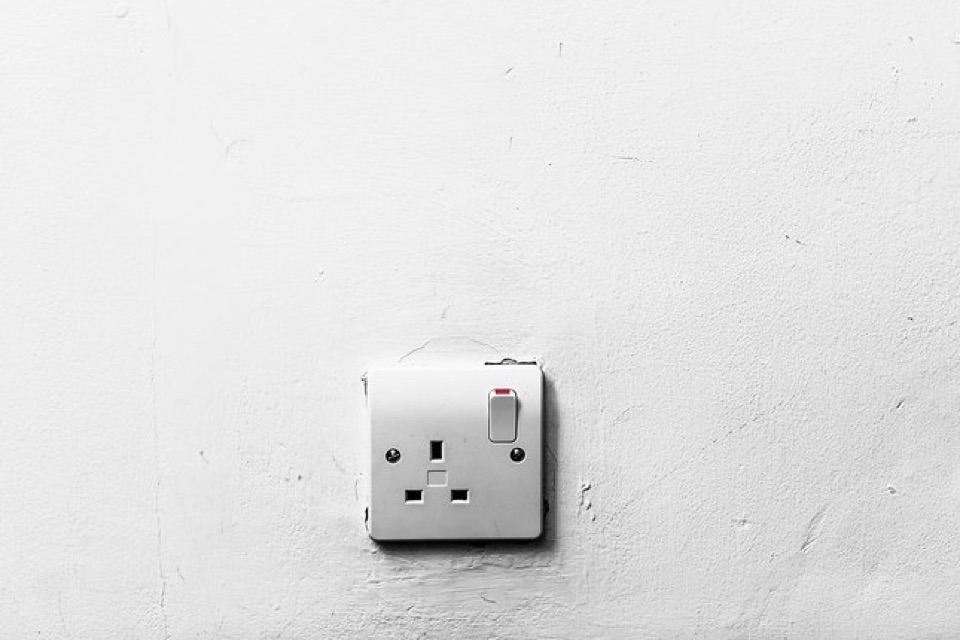
The inverter and the plug and socket can sit inside the house or outside it. Put them outside and the socket has to carry an IP55 rating or higher. That is the job we send to a local electrician: a weatherproof outdoor socket in the right place, on a circuit that can carry it.
Where the direct current cabling runs from outdoors into the house, the manufacturer has to supply the connectors and tell you how to route them. Check that a kit comes with both before you buy it.
The rule appears in the specification twice, once as a marking on the device and once in the instructions.
A panel in a garden is where people reach for an extension lead. We get the socket done properly first, and the panel goes in afterwards.
The product specification permits one device per final ring circuit and then points at the network rules. Engineering Recommendation G98 Issue 2 Amendment 1 holds it to one per household, and that is the tighter of the two.
A compliant device puts at most 800 VA into the mains and draws at most 3.5 amps. The panels feeding it may add up to 2000 watts. Above 960 watts of panel, the specification asks for a professional assessment of whether the installation suits the house. Look for both figures on a listing before you buy.
The instructions that come with a compliant device have to tell you to check whether the product affects your insurance. It is a short phone call, and it is worth making it before the device arrives.
The device can sit outside with its plug and socket inside, and the manufacturer has to supply the connectors and the routing instructions for cable that comes in from outdoors. What you cannot do is bridge the gap with an extension lead, which the specification prohibits.
You do, and the electrician quotes you directly. We do not mark that work up and we take no commission on it.
Ask whether it is on the ENA Type Test Register. A manufacturer has to have the device type tested and registered, and hold confirmation that it was assessed as compliant, before it can be sold. If it is not on the register, it has not been assessed.
Send us your postcode and tell us what the surface is made of. We will reply by email.
Send us your postcodeSend us the postcode and the spot, and we will tell you where it stands.
Your name, postcode and email, plus the roof, wall or garden you have in mind. We reply by email with what the rules allow there and what it would make in a year.
We reply by email. We don't pass your details to anyone and we don't take commission.